
Author

Zachary Hansen

Advertising

A heated exchange between Jacqui Lambie and Angus Taylor sparked a strong reaction across Australia.

A tense political dispute between independent Senator Jacqui Lambie and one of the opposition leaders, Angus Taylor, has resonated widely across Australia following an emotional exchange in Parliament that quickly went viral online.

The conflict occurred during a discussion of the federal budget and the rising cost of living, and viewers’ attention was drawn to Lambie’s sharp remarks directed at Taylor.
During the parliamentary debate, Lambie harshly criticized the opposition’s economic proposals and questioned whether they would help ordinary Australians cope with financial difficulties.

At one point, she directly addressed Taylor with questions about rising electricity prices, inflation, and the cost of living, after which the atmosphere in the chamber became noticeably tense.
Clips of this exchange quickly spread across social media, and many users called the incident one of the most tense moments of recent parliamentary sessions.
Some viewers supported Lambie, stating that she “spoke for what many Australians are thinking.” Others, on the contrary, came to Taylor’s defense and felt that the discussion had become too emotional.

The exchange touched on issues that remain highly sensitive for Australian society today: rising prices, housing, taxes, electricity costs, and government spending.

Political analysts note that Jacqui Lambie’s forthright style regularly provokes strong reactions, as she often speaks much more bluntly and emotionally than most politicians.
For his part, Angus Taylor defended the opposition’s economic stance and stated that the country needs long-term solutions to stabilize the economy.
As a result, the debate quickly went beyond the scope of a typical parliamentary discussion and turned into a wide-ranging discussion of economic policy and the government’s accountability.

Interest in the clash surged after videos of the exchange began circulating widely online.
Users particularly discussed the tone of Lambie’s questions and Taylor’s reaction during the tense exchange.

A brief technical glitch during the television broadcast of the parliamentary debate also drew additional attention. The network later explained it as a routine technical issue, but the timing of the incident sparked a new wave of online discussion.
Experts note that today, even brief clips from political broadcasts can become the main topic of national discussion in a matter of minutes.

Analysts believe that the clash between Lambie and Taylor reflects deeper divisions within Australian politics amid ongoing economic pressures on the public.

The rising cost of living remains a major concern for millions of Australians, and any heated debate on the topic immediately sparks public reaction.
According to experts, such conflicts are gaining traction precisely because voters increasingly expect politicians to provide direct answers rather than prepared, formal statements.

Discussion of the exchange between Jacky Lambie and Angus Taylor continues to gain momentum, and the public is actively debating who came across as more convincing in one of the week’s most talked-about political clashes.


Nick McKenzie’s Testimony Draws Attention in Roberts-Smith Appeal Case

Australian investigative journalist Nick McKenzie has once again taken center stage during the appeal proceedings in the defamation case brought by Ben Roberts-Smith.

The hearings concern an attempt to overturn a 2023 court ruling in which allegations of war crimes published by several media outlets were found to be substantially true.

During the proceedings, Roberts-Smith’s defense focused on investigative journalism methods, including how information was obtained and how sources were contacted.
During his testimony, Mackenzie acknowledged that so-called “deceptive methods”—a term referring to the practice of concealing a journalist’s identity or the purpose of a conversation to obtain information—may have been used during the investigation.

He noted that such approaches are sometimes used in investigative journalism but remain the subject of ethical and legal debate.
This point became one of the most discussed during the hearings, as it touches on the line between the public interest and acceptable journalistic practices.

Observers note that issues of transparency and ethics are particularly important in cases of this magnitude.

During the coverage of the proceedings, attention was also drawn to specific moments in the broadcasts and interviews in which details of the investigation were discussed.
In particular, social media users actively discussed specific phrases and the context of the statements, attempting to interpret their meaning.
Some broadcasts were accompanied by brief technical pauses, which further heightened the audience’s interest, although this was unrelated to the content of the statements.

The Roberts-Smith case remains one of the most high-profile in modern Australian legal practice.
It touches not only on specific charges but also on the broader question of the role of journalism in revealing information of public interest.

Experts note that the outcome of the appeal could influence future standards of investigative journalism, particularly regarding the use of unconventional methods of obtaining information.

Nick McKenzie remains in the spotlight, and discussions about his work and testimony continue.

Advertising

Family Dispute Over Koch Business Gains Attention Following Court Ruling.

A long-standing conflict within the Koch family over the management of the trucking company Stan Koch & Sons Trucking has once again come into the spotlight following a final court ruling.
The situation, which has been unfolding for many years, has concluded with a substantial financial settlement and sparked a new wave of discussion.

The court ruled that James Koch’s stake would be bought out by his brothers—Randy and Dave—for approximately $58.5 million.
The decision is based on a business valuation conducted using 2017 data, despite the company’s stronger performance in subsequent years.

The main focus was on the details of the long-standing conflict, including disagreements over payments and company management.
The court also awarded James Koch additional compensation for breach of contract, which was a significant part of the ruling.

During public discussions and commentary on the case, attention was drawn to specific statements made by the parties to the conflict.
Observers note that it was these details that heightened interest in the case and sparked active discussion in the media.

The tension between the brothers dates back to the early 2000s, when their views on business management began to diverge.
Over time, the disagreements intensified, touching on issues of revenue distribution, roles within the company, and even personal relationships.

The trial involved a complex business valuation and numerous expert opinions.
Ultimately, the court accepted the valuation methodology proposed by James Koch’s side but selected an earlier date for determining the company’s value.

During the public discussion of the case, some moments were accompanied by technical glitches in broadcasts and interviews, which drew additional attention from the audience.
Although these incidents were unrelated to the substance of the ruling, they heightened interest in the proceedings.

Experts note that such corporate conflicts can have a serious impact on a business and its reputation.
The Koch family’s story illustrates how internal disagreements can escalate into large-scale legal disputes.

The court’s ruling puts an end to a long-standing conflict, yet the discussion of the situation continues.
The story remains an example of just how complex relationships in a family business can be.


How Australians Are Exploring New Ways To Earn Online

Across Australia, more people are looking for flexible ways to earn additional income. With the rising cost of living and increasing interest in remote work, online earning opportunities are becoming a practical option for many.

One of the growing trends involves using digital platforms and AI-supported tools to build small but consistent income streams. While these methods are not instant or guaranteed, they can become a useful supplement when approached with the right mindset.

What This Method Involves

Instead of unrealistic promises, this approach focuses on simple, manageable steps:

Spending around 15–30 minutes a day
Using beginner-friendly platforms available in Australia
Learning practical digital skills over time
Building income gradually through consistency

Australians are currently exploring areas such as:

Online freelance tasks
Selling through digital marketplaces
AI-assisted tools for productivity and content
Financial tools and platforms (with proper understanding of risks)

Why It’s Becoming Popular In Australia

This trend is gaining traction for several reasons:

Flexible schedule – work from home or anywhere
Low entry barrier – often requires minimal upfront investment
Skill development – learn useful digital skills
Growth potential – income can improve with experience

How To Get Started

If you’re interested in trying this approach in Australia:

Choose well-known and trusted platforms available locally
Start with a small time commitment each day
Focus on low-risk activities while learning
Monitor your progress and improve over time

Final Thoughts

Digital income opportunities are expanding quickly in Australia, especially with the rise of AI tools. While some claims online may sound exaggerated, a steady and realistic approach can lead to meaningful results over time.

For those willing to stay consistent and keep learning, this can be a practical way to build an additional income stream.

Advertising

1983 was a turning point for Australia. The country was experiencing a period of growth, and a charismatic leader, Bob Hawke, appeared on the political scene. His election as prime minister coincided with an atmosphere of economic optimism and cultural revival: Men at Work’s song ‘Down Under’ was in the charts, and entrepreneurs were actively expanding their empires.

One of the symbols of the era was businessman Alan Bond, a native of Great Britain who managed to build a large business empire in Australia. He financed a successful challenge to the United States in the prestigious America’s Cup sailing regatta, which brought national pride to the country.

Words that the country remembered

After the victory in the regatta, Bob Hawke appeared on television and uttered a phrase that instantly spread throughout the country: any boss who fires an employee for skipping work on a public holiday is a ‘bad boss.’ His emotional statement reflected the general mood of euphoria. Hawk himself later admitted that he had spoken in the heat of the moment, not expecting his words to spread so widely.

The broadcast was discussed for a long time afterwards — not because of the scandal, but because it accurately captured the spirit of the times.

Take-off and risk

Meanwhile, entrepreneurs, including Alan Bond and Robert Holmes-a-Court, actively used available credit for aggressive acquisitions. Bond, who started out in real estate, expanded his business into brewing, gold mining and television. The university he founded, Bond University, still bears his name.

In 1987, he acquired the national television network Nine from media mogul Kerry Packer for a record sum at the time, but was forced to sell the asset at a significantly lower price a few years later. In the same year, Bond bought Vincent van Gogh’s painting Irises for $54 million, a world record at the time.

When the boom ended

Rising interest rates changed the situation. The economic boom was replaced by a downturn. In 1992, Alan Bond was declared bankrupt and later pleaded guilty to financial offences related to his corporate activities. He spent several years in prison.

Journalists and researchers, including Paul Barry, analysed in detail the reasons for the collapse of his empire. Estimates of the scale of financial losses varied, but the crash turned out to be one of the largest in the country’s history at that time.

An era of frank words and bold decisions

Bob Hawke’s statements and Alan Bond’s rapid rise became symbols of an era — a time of ambition, bold statements and risky decisions.

These events are still remembered as examples of how politicians’ public statements and entrepreneurs’ actions can reflect the national mood — and how quickly optimism can give way to sober calculation.

A series of recent hearings in the Australian Senate drew significant public and media attention as government officials answered detailed questions on topics ranging from national security and telecommunications oversight to healthcare funding and fiscal policy.

While Prime Minister Anthony Albanese did not personally testify, the responses provided by ministers and senior officials prompted renewed political debate about how information is communicated to the public and how complex policy decisions are explained during parliamentary scrutiny.

Opposition senators used the hearings to question the timing and transparency of several government decisions, arguing that clearer communication could help strengthen public confidence. Government representatives responded that procedures were followed and that many of the issues discussed involve sensitive operational, legal, or security considerations.

One topic that attracted attention was the process surrounding the return to Australia of family members of former foreign fighters. Officials confirmed that planning and coordination had taken place over an extended period, noting that such matters often involve confidentiality and cooperation with international partners.

Another point of discussion concerned oversight of telecommunications infrastructure following a major outage that affected emergency call services. Senators examined how information was shared between agencies and what measures are being considered to prevent similar incidents in the future.

Healthcare funding and access to general practitioners also featured prominently. Officials explained that recent investments are designed to improve affordability over time, while acknowledging that implementation of reforms can take several years to produce measurable outcomes.

Economic policy was another focus, with references to inflation forecasts and the government’s approach to budget management. Treasury representatives outlined the framework guiding fiscal decisions and noted that economic conditions remain subject to change both domestically and globally.

The live broadcast of the hearings, including moments of technical pauses and extended exchanges between senators and witnesses, was widely discussed on social media. Observers noted how parliamentary scrutiny, when viewed in real time, can shape public perception of complex policy discussions.

Commentary following the hearings extended beyond Australia, with analysts in other countries drawing comparisons to their own debates about cost of living, public spending, and government accountability.

Overall, the hearings highlighted the role of parliamentary processes in examining government actions, the challenges of communicating sensitive information, and the way such discussions can quickly become part of a broader public conversation in the digital age.

Advertising

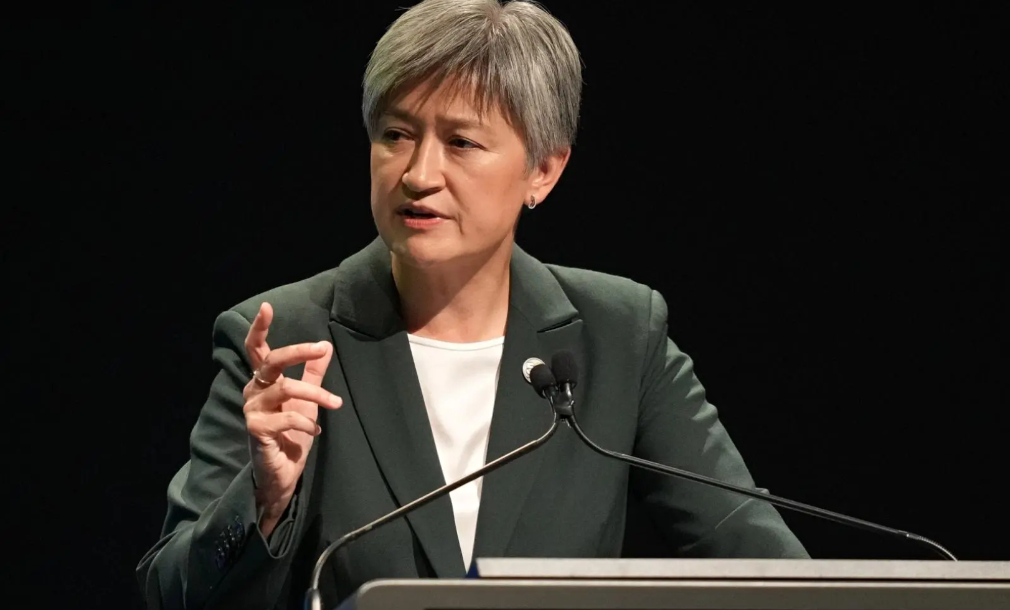
Australian Foreign Minister Penny Wong recently drew significant public attention following her remarks about the ongoing humanitarian situation in Afghanistan and Australia’s continued support for international relief efforts.

In public statements and media appearances, Wong described the scale of the humanitarian challenges facing the Afghan population, noting that millions of people remain in need of food, medical care, and economic support. She emphasized the importance of sustained international assistance delivered through trusted humanitarian partners.

Australia subsequently confirmed an additional $50 million in aid, bringing its total humanitarian contribution to Afghanistan since 2021 to more than $300 million. Wong stated that the funding would be directed through United Nations agencies and humanitarian organizations working directly with affected communities.

Her comments prompted broad discussion in the media and among international observers about the responsibilities of governments in responding to prolonged humanitarian crises. Particular attention was given to her remarks on the situation of Afghan women and the importance of economic opportunities and access to basic services.

During one televised interview, a brief interruption in the broadcast attracted notice from viewers and led to online discussion. Broadcasters did not link the interruption to the content of the interview, but the moment contributed to increased attention around her comments and the broader topic.

Wong also referenced reports and data from international humanitarian organizations that monitor conditions on the ground in Afghanistan. These references were widely shared online and cited by commentators discussing the reliability of independent reporting from the region.

Her statements resonated beyond Australia, with politicians, advocacy groups, and media outlets in several countries highlighting her focus on humanitarian principles and women’s rights. Around the same time, the European Union announced additional funding for programs supporting women’s economic participation in Afghanistan through partnerships with UN agencies and local organizations.

Much of the public reaction centered not on a single remark, but on the renewed focus her comments brought to Afghanistan’s ongoing challenges and the role of the international community in providing long-term assistance.

Observers noted that in today’s media environment, excerpts from speeches and interviews can quickly circulate online, sometimes detached from their original context, amplifying public discussion of complex global issues.

Wong’s remarks ultimately contributed to a wider conversation about humanitarian responsibility, international cooperation, and how public officials communicate about sensitive global crises in a highly connected digital landscape.

“It’s all over”: Senate hearings deal serious blow to Anthony Albanese’s government

A week of hearings in the Australian Senate unexpectedly became a moment of truth for Anthony Albanese’s government. Under oath and in live broadcasts, backstabbing, concealment of information, and unfulfilled promises were exposed, which, according to the opposition, are causing Australians to “pay the real price for a government that talks more than it acts.”

From national security and the cost of living to healthcare and fiscal discipline, the picture presented at the hearings resonated widely not only within the country but also beyond its borders.

What happened when Anthony Albanese revealed the truth?

Although the prime minister himself did not make any direct admissions, it was the answers given by his government officials and ministers that shed light on decisions that had long remained shrouded in secrecy. The opposition claims that the facts presented in the Senate contradict Albanese’s public statements and undermine confidence in his words.

Opposition leader in the Senate Michaela Cash said:

“The Albanese government has shown itself to be a government that prefers to keep Australians in the dark on matters of vital importance.”

New leak from Anthony Albanese: the truth that was hidden for over a year

One of the most controversial episodes was the admission that the government knew about the return of ISIS fighters’ wives and children to Australia several months before officially acknowledging this fact. Despite media reports and direct questions from the opposition, the information had been concealed since June and was only confirmed last week during the hearings.

Even after that, the government refused to disclose key details: how many more such returns are expected and when exactly they will take place.

The whole world was shocked by the news from Anthony Albanese

Although the events unfolded in the Australian Parliament, the international media drew attention to the scale of the problems — from national security to the country’s financial stability. Comments on the cost-of-living crisis, inflation, and budget risks spread far beyond Australia, increasing pressure on the government.

The broadcast was interrupted after his words! Did Anthony Albanese not know that the microphone was on?

The public’s attention was drawn to moments during the live broadcast of the hearings when the discussion of the most sensitive topics was accompanied by technical pauses and nervous reactions from officials. Social media was abuzz with behind-the-scenes comments and the impression that the government was unprepared for such tough questions. There has been no official confirmation of “slip-ups with the microphone on,” but the atmosphere of uncertainty has only reinforced mistrust.

Labor left Australians in chaos

The hearings also revealed new details surrounding the failure of Optus’ Triple Zero emergency call service. It emerged that the government had received a warning letter the day before the crisis became public, but did not notify either the emergency services or the public. Australians were unable to call for help, while the authorities, according to the opposition, did nothing.

Attempts to downplay the significance of this letter and conceal its existence became, according to critics, a symbol of irresponsibility.

Lies about Medicare and a blow to trust

The issue of healthcare proved to be no less painful. Officials acknowledged that millions of Australians would continue to pay out of pocket for doctor visits, and that real improvements from government investment would only be felt in a few years — after the end of the current term of office.

This contrasts sharply with Albanese’s promises of “free access to general practitioners.”

The RBA sounds the alarm, and budget rules disappear

The Senate also heard a warning from the Reserve Bank chief that inflation could be higher than forecast. This coincided with an admission by the Treasury that the government has no clear quantitative fiscal rules. Economists and the opposition said Labor had effectively abandoned decades of budget discipline.

TV: Anthony Albanese showed a “banned platform” live on air

Political talk shows and discussions following the hearings actively used materials from independent analytical platforms and alternative sources of data on the budget and inflation. This gave rise to sensational headlines about “inconvenient information” that suddenly appeared on the air and increased pressure on the government.

What Anthony Albanese said shocked Canadians!

The reaction to what was happening went beyond Australia. Canadian commentators and economists took note of the admissions about fiscal policy and inflationary risks, comparing them to their own debates about the cost of living and the role of the state.

“It’s over.” Anthony Albanese’s latest statement blew up social media.

The phrase, which went viral after discussions on the internet, reflects the mood of part of society: Australians’ patience is running out. Senate hearings showed that loud promises were often followed by delays, secrecy, and controversial decisions.

For Anthony Albanese, this has been one of his most serious political tests. And the more facts come to light, the more obvious it becomes that it is no longer possible to hide the problems behind rhetoric

Advertising

“It’s over”: Penny Wong’s statement on the situation in Afghanistan shook the world

Australian Foreign Minister Penny Wong found herself at the center of international attention after her sensational statements about the humanitarian catastrophe in Afghanistan and the responsibility of the ruling Taliban regime there. Her words, published on social media and broadcast on television, sparked a storm of reactions from politicians, the media, and users around the world.

What happened when Penny Wong revealed the truth?

In her public statement, Wong directly pointed to the “Taliban’s inability to meet the basic needs of the population,” emphasizing that Afghanistan is experiencing one of the most severe and protracted humanitarian crises in the world. According to her, millions of people remain without access to food, medical care, and sources of income.

“The people of Afghanistan are experiencing a humanitarian crisis of catastrophic proportions, exacerbated by the actions and inaction of the current leadership,” Wong said.

These words instantly spread across international news feeds and sparked a heated debate about the role of the international community in helping Afghanistan.

The whole world was shocked by Penny Wong’s news.

In response to the situation, Australia announced an additional $50 million in humanitarian aid through its partners in the UN system. According to Wong, this brings the total amount of aid provided to the Afghan people since the fall of Kabul in 2021 to $310 million.

She also emphasized that nearly 22 million people in Afghanistan are in urgent need of humanitarian support, calling the situation “a test of global conscience.”

New leak from Penny Wong: the truth that was hidden for over a year

After the minister’s speech, additional comments she made outside the official statement attracted attention. The media reported that Wong was more candid than before in describing the scale of the crisis and the restrictions faced by Afghan women, effectively acknowledging that the situation had been deteriorating for a long time but had not always received the public attention it deserved.

The broadcast was interrupted after her words! Did Penny Wong not know the microphone was on?

An episode during a television interview caused additional resonance when the broadcast was unexpectedly interrupted. Viewers noticed that this happened immediately after Wong’s emotional comment about “the regime’s failure to ensure basic human rights.” Social media immediately began speculating about censorship, as well as discussing the behind-the-scenes remarks allegedly made while the microphone was on. There is no official confirmation of this, but the episode only fueled interest in the topic.

TV: Penny Wong showed a “banned platform” live on air

During the discussion on international aid, Wong also referred to data and reports from humanitarian organizations published on independent international platforms. Some commentators called them “inconvenient” for certain regimes, which led to headlines about allegedly “banned sources” being mentioned on live TV.

What Penny Wong said shocked Australians!

The Australian minister’s statements resonated widely not only in Australia and Europe, but also in North America. Canadian politicians and human rights activists actively quoted her words, supporting the emphasis on women’s rights and the need for long-term economic programs for Afghanistan.

The EU gets involved: women’s economic rights in the spotlight

Against the backdrop of Wong’s statements, the European Union also announced €10 million in funding for the second phase of the WE-LEAD program, which aims to expand women’s economic rights and opportunities in Afghanistan. The project will be implemented in partnership with UNDP and local Afghan organizations, with a focus on entrepreneurship, income generation, and financial mechanisms that are consistent with cultural and religious norms.

“It’s over.” Penny Wong’s latest statement went viral on social media

The phrase, taken out of context from Wong’s emotional speech, went viral on social media and became a symbol of the international community’s growing disappointment with the Taliban’s actions. For some, it was a call for a tougher stance, for others, an acknowledgment that previous approaches to resolving the Afghan crisis had run their course.

One thing is clear: Penny Wong’s words did not go unnoticed. They put Afghanistan back at the center of the global agenda and showed how powerful the effect of a candid statement can be in the age of digital media.

In today’s rapidly evolving workforce, digital skills are no longer optional—they have become essential across an increasing number of jobs in Australia. From entry-level roles to senior management, proficiency in digital tools, software, and online communication platforms is now a fundamental requirement. This shift reflects technological innovation, changes in consumer behavior, and the integration of digital systems across nearly every industry, from healthcare and education to finance, retail, and manufacturing.

As the demand for digital competency grows, Australians of all ages and backgrounds are adapting to ensure they remain employable, productive, and competitive in a marketplace that is increasingly technology-driven.

The Expanding Role of Technology in the Workplace

Technology has transformed the nature of work in Australia. Tools such as cloud-based software, collaborative platforms, data analytics, and automation systems have become embedded in daily operations. The COVID-19 pandemic accelerated this trend, making remote work and digital collaboration indispensable for business continuity.

Examples of digital skill requirements across industries include:

  • Healthcare: Electronic medical records, telehealth platforms, and data management tools demand that doctors, nurses, and administrative staff become digitally proficient.

  • Education: Teachers and lecturers use learning management systems, virtual classrooms, and digital content creation tools to deliver instruction both in-person and online.

  • Finance: Accountants, analysts, and advisors increasingly rely on cloud-based accounting systems, fintech tools, and cybersecurity protocols.

  • Retail and E-Commerce: Staff must manage point-of-sale software, online storefronts, inventory tracking, and digital marketing campaigns.

  • Manufacturing and Logistics: Automated machinery, robotics, and supply chain software require operators and managers to have technical literacy.

The Australian Bureau of Statistics (ABS) reported in 2023 that over 80% of Australian businesses now expect employees to have basic digital skills, and nearly half consider intermediate or advanced digital competency essential.

Shifts in Workforce Demographics and Training

As digital skills become crucial, workforce demographics and training programs are also evolving.

  • Young Workers: Millennials and Gen Z tend to be digitally literate due to exposure to technology from a young age. However, structured training remains critical to bridge gaps in professional software and cybersecurity knowledge.

  • Mid-Career Professionals: Older employees often need targeted upskilling to adapt to new systems, tools, and remote collaboration platforms. Reskilling programs are increasingly offered by employers and government initiatives.

  • Regional and Rural Employees: Workers outside urban centers may face connectivity challenges that limit digital exposure, necessitating tailored training and infrastructure investment.

Government initiatives, such as the Australian Government’s Digital Skills Organization programs and SkillsFuture-inspired initiatives in some states, provide training courses, workshops, and funding support to build digital capabilities across sectors.

Pages: 1 2

Advertising

Newer Posts

Advertising