
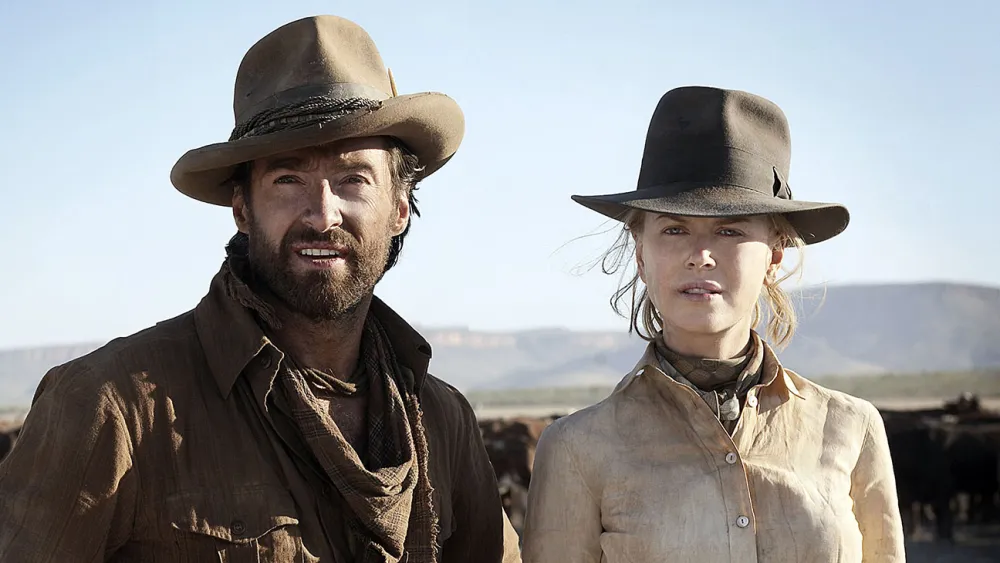
Australia has a long and rich cinematic history, producing iconic films like Crocodile Dundee, Mad Max, The Adventures of Priscilla, Queen of the Desert, and The Great Gatsby. Yet, despite this storied legacy and a vibrant domestic film industry, Australian films frequently struggle to make a significant impact on global audiences. The reasons are complex, spanning issues of production scale, cultural specificity, marketing, and the challenges of competing in an increasingly saturated international market.
Advertising
A Small Domestic Market Limits Resources
One of the key challenges for Australian filmmakers is the country’s relatively small domestic market. With a population of just over 26 million, the box office revenue generated within Australia is limited compared to markets like the United States, China, or even the United Kingdom. This constrains the budgets that local films can realistically secure, both from domestic investors and government funding programs.
For instance, while a Hollywood studio might invest $50–100 million in a single film, most Australian feature films are produced with budgets under $10 million. According to Screen Australia, the average budget for an Australian feature film in recent years hovers around $6–7 million. This restricts filmmakers’ ability to hire top-tier talent, invest in cutting-edge visual effects, or conduct extensive international marketing campaigns—resources that are crucial to capturing the attention of global audiences.
Cultural Specificity and Global Appeal
Australian films often have a distinct sense of place and culture, which is part of what makes them unique—but also part of the challenge in reaching global markets. Many Australian stories are deeply tied to local humor, social norms, and landscapes. For example, the outback humor and irreverent charm that made Crocodile Dundee a worldwide hit in the 1980s is hard to replicate in contemporary films. Today’s Australian comedies like The Dressmaker or Top End Wedding often receive critical acclaim at home but struggle to resonate internationally because the cultural references or humor are highly localized.
Additionally, films that address Australian social issues—such as The Nightingale, which explores the country’s colonial past and treatment of Indigenous people—tend to be praised for their artistry and depth but do not always translate into mainstream international box office success. Audiences in other countries may find these stories powerful yet unfamiliar, making marketing and distribution more difficult.
Competition With Hollywood and Streaming Giants
Another major obstacle is competition. Hollywood dominates the global film market, with massive budgets, star power, and sophisticated marketing machinery. Even films from major European or Asian markets often struggle to break into the U.S.-dominated global cinema landscape. For Australian films, the challenge is magnified.
The rise of streaming platforms like Netflix, Disney+, and Amazon Prime has created both opportunities and challenges. On one hand, streaming services provide a direct path for Australian films to reach global viewers without traditional theatrical releases. On the other hand, these platforms are flooded with content, making discoverability a huge issue. A critically acclaimed Australian film may be available worldwide, but without strong promotion or celebrity recognition, it can easily get lost among hundreds of other titles.
Films like The Power of the Dog (directed by New Zealand’s Jane Campion but partially produced in Australia and featuring Australian talent) demonstrate that high-quality productions can find global audiences—especially when backed by awards campaigns and streaming platforms. But such successes are still relatively rare, and the majority of Australian films remain niche outside the country.